Finding purpose through research
MIT News ·
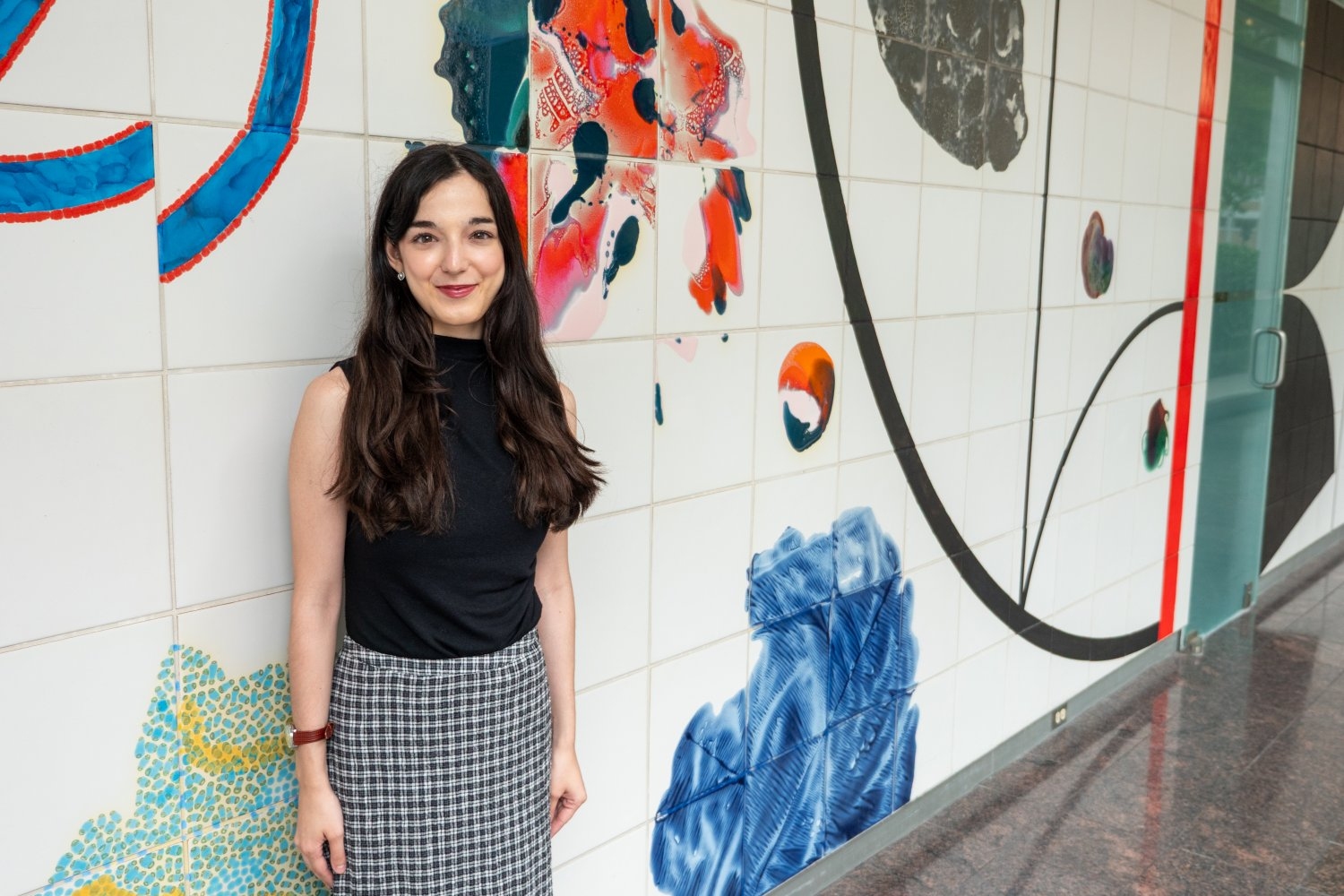
This summer, BSG-MSRP-Bio student Marina Milea investigated how lung cancers become resistant to targeted therapies, gaining hands-on research experience in the Jacks Lab at the Koch Institute.
Most mornings this summer, Marina Milea arrived at the Koch Institute for Integrative Cancer Research building ready to juggle several experiments at once. While one set of samples incubated, she stained mouse tissue sections for immunohistochemical analysis, prepared to run a Western Blot gel, and checked in on an organoid culture.
All this work, and more, was part of learning the complex workflows behind studying how cancer evolves over time in the Jacks Lab at MIT. For the rising senior, who is majoring in biology at the City College of New York (CCNY), the pace was exactly what she had hoped to find through MIT's Bernard S. and Sophie G. Gould MIT Summer Research Program in Biology (BSG-MSRP-Bio).
"The techniques can be taught," she says. "The hardest part has been understanding the complex mouse and organoid models and why we're using them. Once you understand the biology behind the model, you can really interpret your results and think about how they might translate to human biology."
Milea is investigating how lung cancers driven by mutations in the KRAS gene become resistant to targeted therapies by transforming into a different subtype that is often harder to detect and treat, a phenomenon called adeno-to-squamous transition. By studying the signaling pathways and protein families that support this transition, researchers hope to identify new therapeutic targets for patients whose histologically-transformed cancers no longer respond to treatment.
"I wanted to do something that had translational aspects to it — to work on research that could potentially change how patients receive therapy," she says. "That's incredibly motivating as an undergraduate."
Building a foundation
Milea says CCNY has played an important role in helping her pursue research to build upon her strong academic foundation. Located in New York City, the university is uniquely positioned to foster collaborations with nearby institutions, connecting students with laboratory experiences across the city while serving a diverse student population that includes many first-generation and low-income students.
Milea's interest in biology began while attending high school in England, where students choose academic subjects early. Initially drawn to medicine, she pivoted to biomedical research after being diagnosed with an understudied health condition, sparking her curiosity about the mechanisms underlying disease.
Before coming to MIT, Milea gained research experience in several laboratories, most notably at Columbia University between the Azizi and McFaline-Figueroa labs.
"I went from having no cell culture experience to learning CRISPR techniques, T-cell engineering, and machine-learning approaches in a single summer," she says. "It was intense, but it gave me confidence that I could handle a research environment like MIT's."
Learning to think like a scientist
At MIT, Milea found herself in a laboratory that matched both her scientific interests and her desire for close mentorship, working with graduate student Carrie Rodriguez.
"I could tell Carrie genuinely wanted to teach," she says. "She explains not just the protocols, but the biology behind them. By understanding why we're doing each experiment, I could contribute my own ideas."
As the weeks progressed, Rodriguez gradually entrusted Milea with carrying out more and more work independently.
"By the second month, I was running entire workflows on my own," Milea says. "I felt like I was really helping move the project forward."
Milea's willingness to learn and engage deeply with the science made her a valuable member of the lab.
"Marina arrived in the lab with an outstanding attitude, ready to take full advantage of this opportunity. Over the course of the summer, she was able to learn a number of new techniques and, more importantly, dig deep into the biology of lung cancer. She was a wonderful addition to the lab," Tyler Jacks says.
Looking ahead
Outside the laboratory, faculty lectures, journal clubs, and conversations with researchers all play a part in broadening the scientific perspective of BSG-MSRP-Bio program students. A lecture by MIT Professor David C. Page , for example, whose work explores sex differences in health and disease, reinforced Milea's long-term goal of advancing research in women's health.
"He talked about pursuing scientific questions because you believe they're important, even if they're not yet considered priorities," she says. "That, in particular, resonated deeply with me."
Following graduation, Milea plans to pursue a PhD in biomedical sciences and hopes to build a career that combines research, teaching, and mentorship.
A program that values potential
Looking back, Milea hopes other students will feel confident pursuing opportunities that initially appear out of reach.
"A lot of people count themselves out without understanding what a program like this one is looking for," she says. "They value people who have original thinking and who can really contribute to the projects intellectually and practically."
Although the BSG-MSRP-Bio program is one of the country's premier undergraduate research programs, she believes its commitment to fostering students' potential is what makes it exceptional.
"It's somehow the most competitive and the most open-access program there is in the country," she says. "You can be an international student, first-generation, low-income, or from a non-research-intensive university — but you still need to meet high expectations. It's somehow both, which is great."
For Milea, that's what makes the program unique.
"They have high expectations," she says, "but you can be anybody."