Diplomacy for Peace and Sustainable Development: Turkmenistan Presents Its Priorities at the 81st Session of the UN General Assembly
Turkmenistan RSS Feed ·
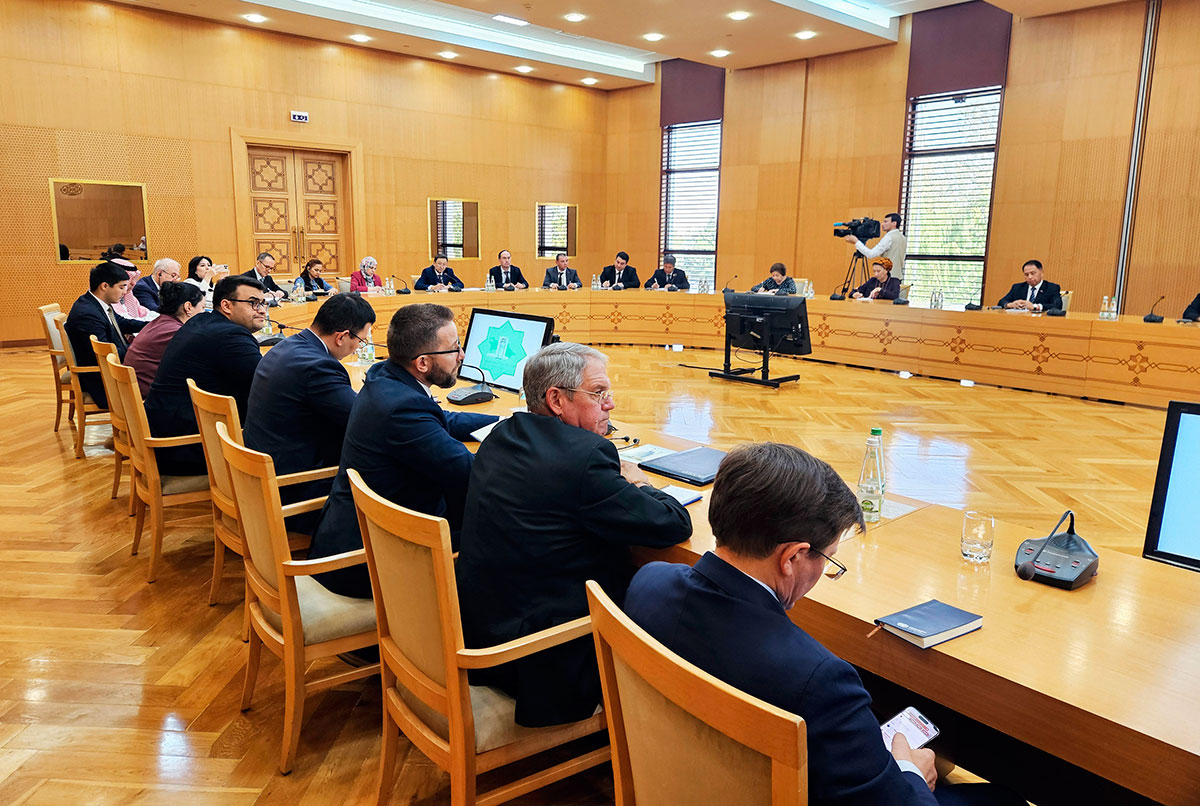
On September 18, the Ministry of Foreign Affairs of Turkmenistan hosted a briefing dedicated to the country’s priorities for the upcoming 81st session of the United Nations General Assembly, as well as current areas of international economic cooperation.
On September 18, the Ministry of Foreign Affairs of Turkmenistan hosted a briefing dedicated to the country’s priorities for the upcoming 81st session of the United Nations General Assembly, as well as current areas of international economic cooperation.
Rovshen Annaberdiyev, Head of the Department of International Organizations at the Ministry of Foreign Affairs of Turkmenistan, delivered a detailed presentation outlining Turkmenistan’s comprehensive approach. As was noted, the country’s foreign policy initiatives for the upcoming session have been formulated around five main areas.
These are peace, security, and neutrality; sustainable development and transport; energy; climate and the environment; humanitarian cooperation, international law, and participation in the activities of the United Nations.
As was stated, within the framework of ensuring international stability, Turkmenistan will continue the practical implementation of resolutions previously adopted by the UN General Assembly. A central place in this work is assigned to the Global Security Strategy put forward by the President of Turkmenistan, Serdar Berdimuhamedov.
“Particular attention will be paid to the practical implementation of the provisions of the resolutions adopted by the General Assembly, ‘Permanent Neutrality of Turkmenistan’ and ‘The Role and Importance of a Policy of Neutrality in Maintaining and Strengthening International Peace, Security and Sustainable Development Process.’ In this context, one of the most ambitious initiatives of Turkmenistan remains the Global Security Strategy proposed by the President of our country,” stated R. Annaberdiyev.
Particular attention in the presentation was devoted to the rapid development of artificial intelligence (AI) technologies. Emphasizing the high potential of AI in diplomacy, crisis analysis, and early warning systems, the representative of the Ministry of Foreign Affairs also pointed to risks associated with data security, state sovereignty, and human oversight.
In this regard, Turkmenistan is putting forward an initiative to develop, under the auspices of the United Nations, an International Code on the Peaceful Use of Artificial Intelligence in International Relations and Diplomacy.
“Such a document could establish agreed international standards and ethical principles for the use of artificial intelligence in preventive diplomacy, mediation, and negotiation processes,” added the speaker.
Considering transport connectivity as a foundation for sustainable development and economic integration, Turkmenistan is emphasizing the launch of the UN Decade of Sustainable Transport 2026–2035, initiated by the Turkmen side.
As part of this program, it is proposed to continue the creation of the Global Atlas of Sustainable Transport Connectivity.
“Within the framework of the Decade, our country proposes to continue work on creating the Global Atlas of Sustainable Transport Connectivity. We regard it as a universal visual and analytical tool that will make it possible to systematically map international transport corridors, assess the level of connectivity, and facilitate monitoring of progress toward achieving the objectives of the Decade,” said the head of the department.
In the environmental and climate sphere, the country adheres to an integrated approach that links climate issues with water and food security.
In this area, Turkmenistan is putting forward two significant initiatives as new practical steps.
“One of the new initiatives is the proposal to establish a permanent format for multilateral cooperation — the Ashgabat Climate Dialogue. This platform is expected to contribute to the institutionalization of international cooperation on the climate agenda, the exchange of experience, and the development of partnerships. The second initiative concerns strengthening climate resilience in arid and water-scarce regions. This initiative could bring together efforts to develop hydrological and climate monitoring, create early warning systems, exchange data on the state of water resources, and introduce water-saving technologies,” emphasized R. Annaberdiyev.
The positions presented at the briefing once again confirm Turkmenistan’s consistent course toward strengthening multilateral dialogue, ensuring universal security, and achieving the UN Sustainable Development Goals.