A new understanding of how enzymes influence bacterial protein production
MIT News ·
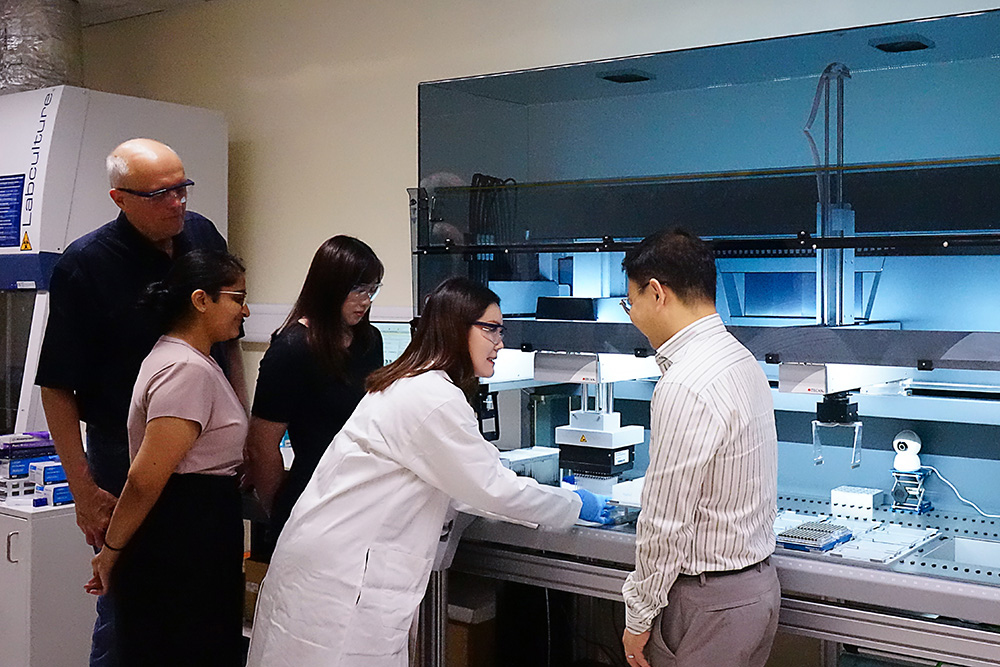
Novel research expands scientific understanding of how RNA shapes the reading of genetic information.
Antimicrobial resistance is one of the most pressing global health and development challenges of our time. Bacteria and other pathogens are rapidly developing resistance to existing treatments, making infections harder to treat. Without new approaches, minor inconveniences today, such as routine surgeries or even a paper cut, could become life-threatening tomorrow.
Now, an international group of scientists reports the discovery of aminovaleramididine synthetase (AvaS), the first identified pyridoxal phosphate (PLP)-dependent enzyme responsible for producing a chemical modification linked to how bacteria respond to metabolic stress. This discovery sheds new light on how bacteria use RNA modification to control protein production, opening new avenues to study bacterial adaptation and identify future targets and better strategies for developing antimicrobial therapeutics.
The work was led by researchers from the Singapore-MIT Alliance for Research and Technology ’s Antimicrobial Resistance interdisciplinary research group (SMART AMR), alongside collaborators from MIT, Nanyang Technological University in Singapore, and institutions in the United States, Poland, and France.
“While many RNA modifications have been known for decades, researchers are still uncovering the full extent of their roles. The discovery of AvaS opens a previously unknown chapter in RNA biology and is an important step forward in our understanding of processes relevant to antimicrobial resistance,” says Professor Peter Dedon, co-lead principal investigator at SMART AMR, professor of biological engineering at MIT, and co-corresponding author of a new paper on the work. “As we continue to map the RNA modification landscape, we expect many more discoveries with meaningful implications for infectious disease, antimicrobial resistance, and fundamental biology.”
Bacteria can develop resistance to antibiotics using various strategies, many of which depend on the bacteria’s ability to regulate which proteins are made, when they are made, and how accurately they are produced — whether by pumping drugs out of their cell, creating enzymes that break down drugs, or developing new cell processes to avoid the antibiotics’ target.
To build these proteins, bacteria rely on RNA molecules to read genetic instructions and direct protein production. Among these RNA molecules are transfer ribonucleic acid (tRNAs), a specialized class of RNA that acts as molecular delivery vehicles bringing chemical “stickers” to help bacteria control how proteins are made in response to stress and changing conditions such as exposure to antibiotics.
In the open-access paper, “ Pyridoxal phosphate-dependent biosynthesis of aminovaleramide by AvaS in tRNA ,” published Sept. 9 in Nature Chemical Biology , the researchers described their discovery of the new enzyme and identified it as being responsible for creating a tRNA chemical modification known as aminovaleramide cytidine (ava 2 C) in Pseudomonas aeruginosa , a harmful bacterium responsible for a range of serious human infections such as pneumonia and sepsis. While ava 2 C had previously been detected in several bacteria and plants, the enzyme responsible for producing this modification was previously unknown.
Using SMART AMR’s high-throughput liquid chromatography-tandem mass spectrometry (LC-MS/MS)-based RNA modification profiling platform, the team systematically screened thousands of P. aeruginosa mutants and discovered AvaS. The researchers also confirmed the presence of ava 2 C in other organisms, including the bacteria Acinetobacter baumannii and Vibrio cholerae , as well as the plant Arabidopsis thaliana .
The research revealed that AvaS uses PLP, a vitamin B6 derivative, to convert a known modification, lysidine (k 2 C), into ava 2 C; marking the first time that a PLP-dependent enzyme has been linked to tRNA modification. Traditionally, PLP-dependent enzymes have only been associated with amino acid metabolism and related biochemical pathways.
The research findings revealed a few important insights about PLP-dependent enzymes. First, the discovery establishes PLP-dependent enzymes as a previously unrecognized class of tRNA-modifying enzymes, expanding the known chemical mechanisms, such as methylation, thiolation, and isomerisation, that bacteria use to regulate protein production. Second, it reveals an entirely new biological function of PLP-dependent enzymes, demonstrating that they can directly modify tRNA in addition to their well-established roles in metabolic processes.
The research also found that ava 2 C changes how bacteria read genetic codes, enabling the bacteria to produce protein faster and more efficiently while helping them adapt to metabolic and oxidative stress.
“Our discovery has revealed, for the first time, that PLP-dependent enzymes can directly modify tRNA, expanding our knowledge and understanding of RNA-modifying chemistry,” says Jingjing Sun, research scientist at SMART AMR, first author, and co-corresponding author of the paper. “This opens up new avenues for studying bacterial adaptation and developing new and more effective strategies to overcome drug-resistant bacteria.”
Building on this discovery, the SMART AMR team plans to investigate how ava 2 C affects bacterial stress responses and metabolism and explore how the modification can be disrupted or prevented. Understanding this process could uncover new ways to fight harmful bacteria and develop future antimicrobial therapeutics. With ava 2 C also being observed in plants, future studies could explore whether other living organisms use similar biological tools to produce certain chemical modifications and how ava 2 C influences the way proteins are built beyond bacteria.
More broadly, this work highlights the strength of SMART AMR’s first-of-its-kind epitranscriptomics platform as a powerful engine in discovering more unknown RNA-modifying enzymes at scale. This capability could also support biotechnology and pharmaceutical researchers in finding new drug targets and developing better treatments, particularly as bacteria continue to develop resistance against existing drug treatments.
The research conducted at SMART is supported by the National Research Foundation Singapore under its Campus for Research Excellence and Technological Enterprise program.