HAMAQ
NASA Science ·
HAMAQ will improve how scientists observe and forecast air quality in major metropolitan regions. The post HAMAQ appeared first on NASA Science .
… EVS-4 HAMAQ Earth Explore Explore Earth Science Agriculture Air Quality Climate Change Drought Freshwater Life on Earth Severe Storms Snow and Ice The Global Ocean The Ozone Hole Science at Work Earth Science at Work Technology and Innovation Powering Business Multimedia Image Collections Videos Data For Researchers About Us HAMAQ Hemispheric Airborne Measurements of Air Quality
NASA’s Hemispheric Airborne Measurements of Air Quality (HAMAQ) mission will improve how scientists observe and understand air quality in major metropolitan regions. By combining satellite, aircraft, and surface monitoring data, HAMAQ will examine the factors driving urban pollution, including how they change across seasons, geography, and human activities.
Mission Type
Launch
Objective
In 2028, HAMAQ will conduct two deployments: one over Mexico City in the spring and another over Atlanta in summer. These contrasting environments serve as ideal testing grounds for strengthening satellite‑to‑ground connections and improving air‑quality models.
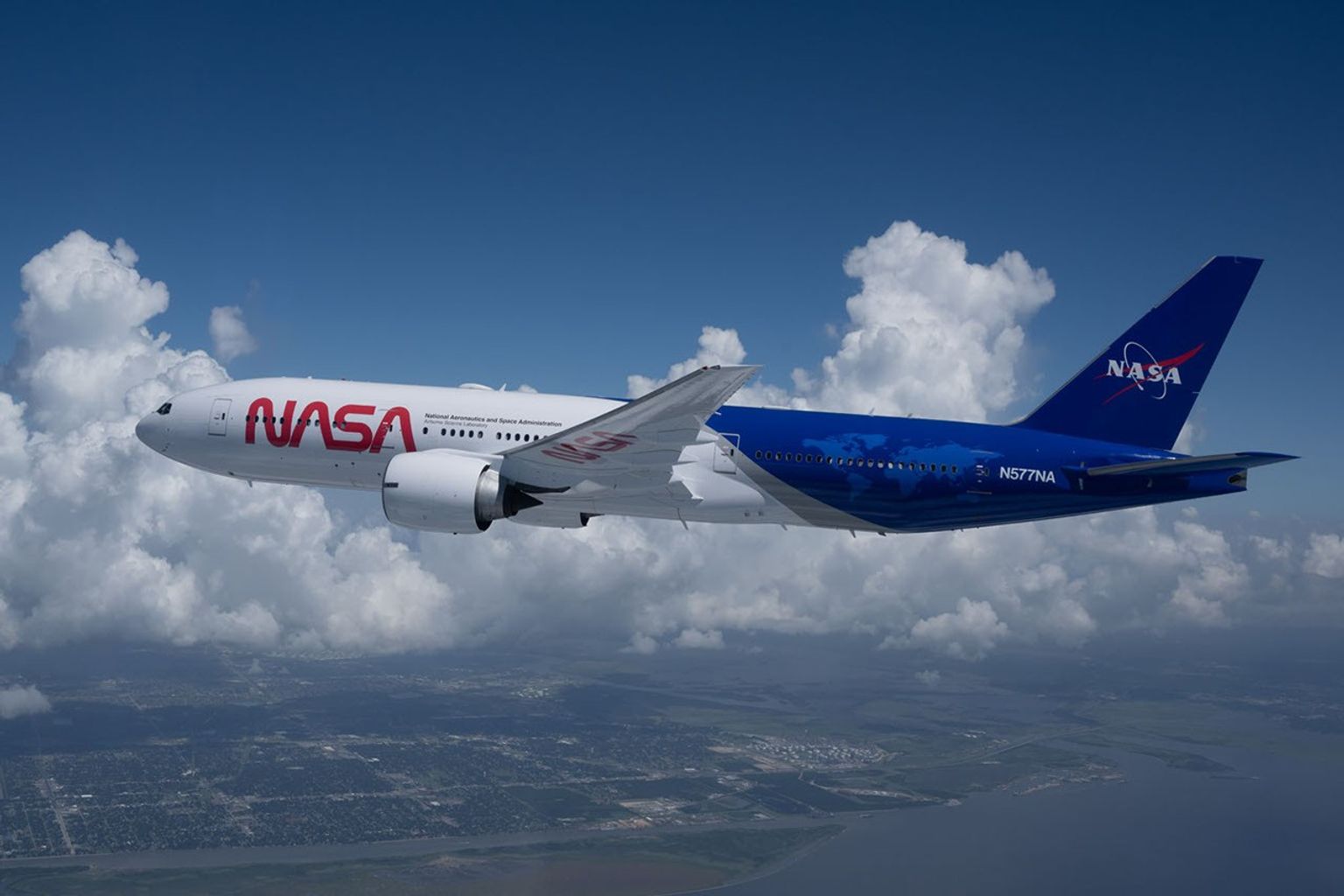
The mission will use two coordinated NASA aircraft. NASA’s B777 will map pollution from above with remote‑sensing instruments, while the P‑3 will fly closer to the surface to measure aerosols, gases, and boundary‑layer structure. Combined with satellite data from TEMPO (Tropospheric Emissions: Monitoring of Pollution) and ground observations, these measurements are designed to support more accurate air quality insights.
The campaign’s multi-platform observing strategy is designed to address several key questions:
The campaign’s integrated observing system combines satellite, airborne, and ground assets to provide a comprehensive view of air quality. Remote sensing from NASA’s B777 aircraft will map trace gases like nitrogen dioxide and formaldehyde at a high resolution, supporting geostationary satellite observations and validating TEMPO products. Instruments attached to NASA’s P‑3 aircraft will measure fine particles, chemical components, and aerosols by flying low‑level patterns above Mexico City and Atlanta.
The campaign will also contribute to the Atmospheric Composition Virtual Constellation, an international coordination effort led through the Committee on Earth Observation Satellites. This effort brings together atmospheric-composition observations from multiple space agencies and satellite missions to function as a unified system advancing global consistency in air quality measurements. HAMAQ’s atmospheric measurements will refine air‑quality models and scenario testing. Together, these efforts will provide new insights into emissions, atmospheric chemistry, and pollution transport to better support air‑quality management.
Article 6 Min Read Chasing Fire Clouds in Utah
Article 6 Min Read New NASA Earth Missions Gear Up to Start Science Flights
The EVS-4 missions: FARMFLUX | FORTE | HAMAQ | INSPYRE | LACCE | SNOW4FLOW
Your home. Our Mission. And the one planet that NASA studies more than any other.
NASA's Earth Observatory brings you the Earth, every day: images, stories, and discoveries about the environment, Earth systems, and climate.
NASA Earth Science helps Americans respond to challenges and societal needs — such as wildland fires, hurricanes, and water supplies…
Collection of Earth science videos explaining a variety of concepts and activities performed by NASA's Earth Science Division.
The post HAMAQ appeared first on NASA Science .